


Curating Fine Jewellery for Your 30s and Beyond
Your 30s mark a turning point. The impulsive purchases of your 20s — the trend-driven cocktail pieces, the high-street gold-fills — give way to something more considered. This is the decade when jewellery stops being decoration and becomes investment. The question is no longer "what do I like right now?" but "what will I still be reaching for in 20 years?" Building a capsule fine jewellery collection requires the same discipline as a great wardrobe: fewer pieces, chosen with precision, worn constantly.
Here is how to do it properly.

The Capsule Foundation: Seven Pieces That Do Everything
A well-constructed personal collection is not built around occasions. It is built around daily life. The seven pieces below are not arbitrary — each one earns its place through versatility, longevity, and the ability to anchor or elevate whatever sits around it.
1. The Modern Solitaire
Every considered collection starts with a signature stone. Whether it is a personal milestone ring, an heirloom reset, or a bespoke commission, the solitaire is the piece that says most about where your taste has arrived. Choose a setting that reflects the aesthetic you have now, not the one you had at 22.

Suzie Saltzman 
Fresh Recollection 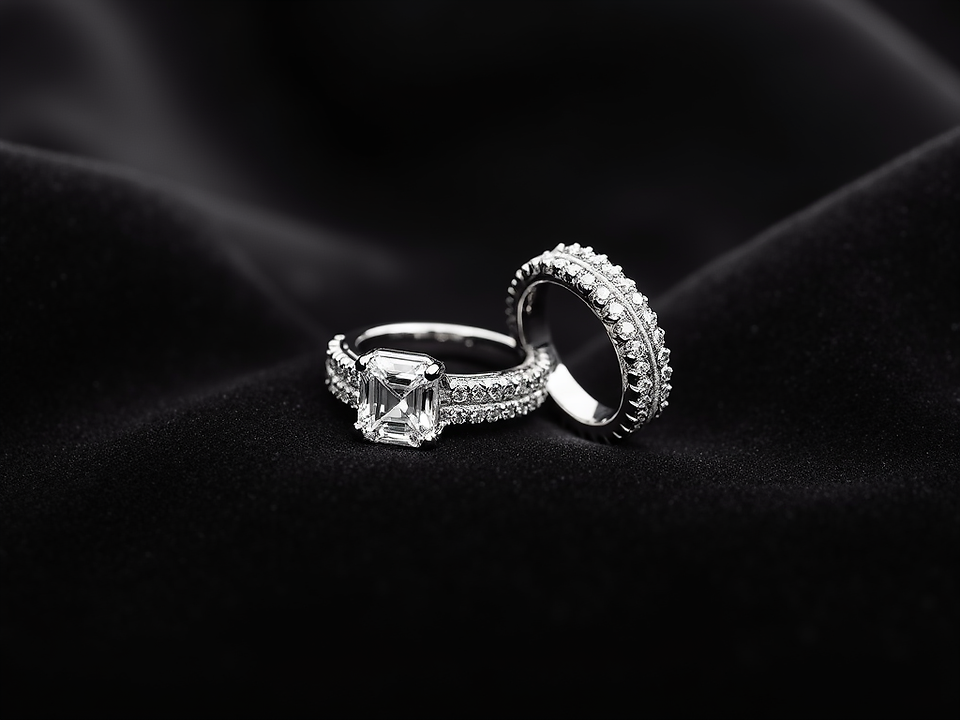
Fresh Recollection
2. The Tennis Bracelet
Few pieces have demonstrated the same enduring presence on the wrist as the bezel-set or prong-set diamond line bracelet. For daily wear, low-profile bezel settings offer the cleanest line and the least resistance — they move with you rather than catching on fabric. A quality tennis bracelet in 18K white or yellow gold is a piece that appreciates in both financial and personal value.
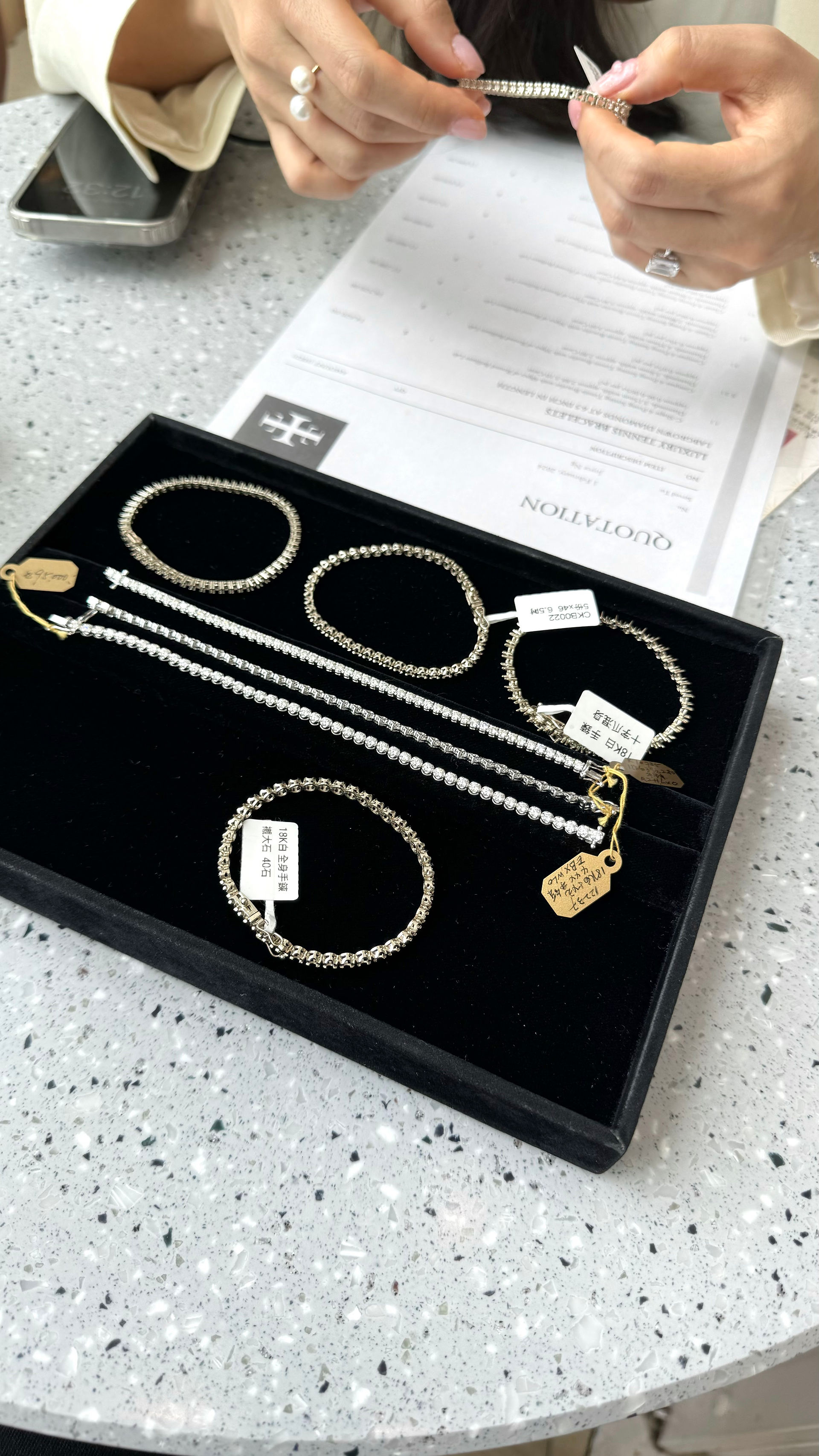
Fresh Recollection Bespoke Tennis Sizes 
Ring Concierge
3. Diamond Studs
The anchor point of any ear stack. Classic round brilliants in bezel settings provide a modern visual footprint while keeping the stone secure for everyday wear. These are the pieces you put on first and remove last.
4. Sculptural Gold Hoops
Solid or hollow 18K gold hoops in a medium size are among the most versatile pieces you can own. They frame the face, add structure to tailored looks, and require no justification. This is not a trend purchase — a well-made pair of 18K hoops will outlast everything around them.
5. The Stacking Ring Suite
Built over time rather than bought all at once, a hand stack of knife-edge bands, signet rings, and flush-set gem rings creates one of the most personal signatures in fine jewellery. The texture, metal tone, and rhythm of a well-assembled stack is entirely your own.

6. The Layering Pendant
An 18–20 inch chain carrying an engraved medallion, talisman, or zodiac piece that sits below the collarbone. It functions as the base layer of a neck stack and operates as quietly confident jewellery — present without demanding attention.

7. The Bespoke Milestone Piece
The one commission you make to commemorate something that matters: a cuff, a cluster ring, drop earrings. This is where craft and biography converge. It is also the piece most likely to become an heirloom.
Where to Find the Right Maker
The fine jewellery market has never been more varied, and that variety works in the buyer's favour. Understanding the landscape — from avant-garde independent studios to the heritage houses — allows you to match your brief to the right atelier.
Independent Studios and Avant-Garde Ateliers
For collectors who want something singular, independent studios offer a level of personal attention and design originality that the larger houses cannot replicate. Fresh Recollection, a Hong Kong bespoke fine jewellery house, specialises in custom commissions and the kind of client relationship that turns a brief into something genuinely personal. Mociun, based in Brooklyn, has built a devoted following for its cluster gemstone settings and commitment to rare, ethically sourced coloured sapphires. Jennie Kwon Designs brings an art-deco sensibility to delicate architectural pieces, while Anna Sheffield produces ceremonial stacks and alternative solitaires that sit at the intersection of fine jewellery and sculptural art. For accessible solid gold essentials and stacking rings with genuine craft behind them, Catbird NYC remains one of the most trusted names in the independent fine jewellery space.
The Heritage Houses
For the investment pieces in your collection — the classics that carry both archival and resale value — the great houses earn their place. Cartier remains unrivalled in structural iconography: the Love, Juste un Clou, and Trinity collections have proven themselves across generations. Tiffany & Co. sets the benchmark for diamond sourcing and the kind of solitaire settings that feel as current today as they did decades ago. Boucheron, founded in 1858 at Place Vendôme, brings a particularly avant-garde architecture to high jewellery — the Quatre and Serpent Bohème collections are among the most distinctive in Paris.
A Framework for Every Commission
Whether you are adding a single piece or beginning a collection from scratch, these four questions will keep every decision grounded.
Does the metal karat match what I already own? Mixing 10K and 18K gold across a hand stack creates uneven wear over time. Standardise at 18K for fine pieces — it is widely recognised as the professional standard for durability and richness of colour across the trade.
Can this stone withstand daily wear? Diamonds (10 on the Mohs scale), sapphires (9), and rubies (9) are the recognised hardness benchmarks for daily-wear stones, as established by gemological bodies including the GIA. Softer stones — opals, pearls, turquoise — belong in pieces worn occasionally.
Have I considered proportion and ergonomics? Ring height, edge comfort, and clasp security are decisions that feel minor at the counter and enormous six months into daily wear. Ask to try a piece for a full day before committing to a commission.
Does the maker's core design language match my vision? A studio celebrated for organic textures and asymmetrical forms is not the right partner for a clean, architectural brief. Study the portfolio before you book the consultation.
The Long View
The best fine jewellery collections share one quality: restraint. They are not assembled quickly, and they are not assembled to impress. They are built piece by piece, each one chosen because it earns daily wear and improves with age. A bespoke commission from a studio like Fresh Recollection, a classic from Cartier, or a studied investment in a Tiffany & Co. solitaire — what these choices share is an intention that the piece outlasts the moment it was bought for.
Your 30s are not too early to start building seriously. In fact, they are exactly the right time.


Comments